How can titanium parts manufacturers improve aerospace efficiency with Wstitanium's rapid prototyping?
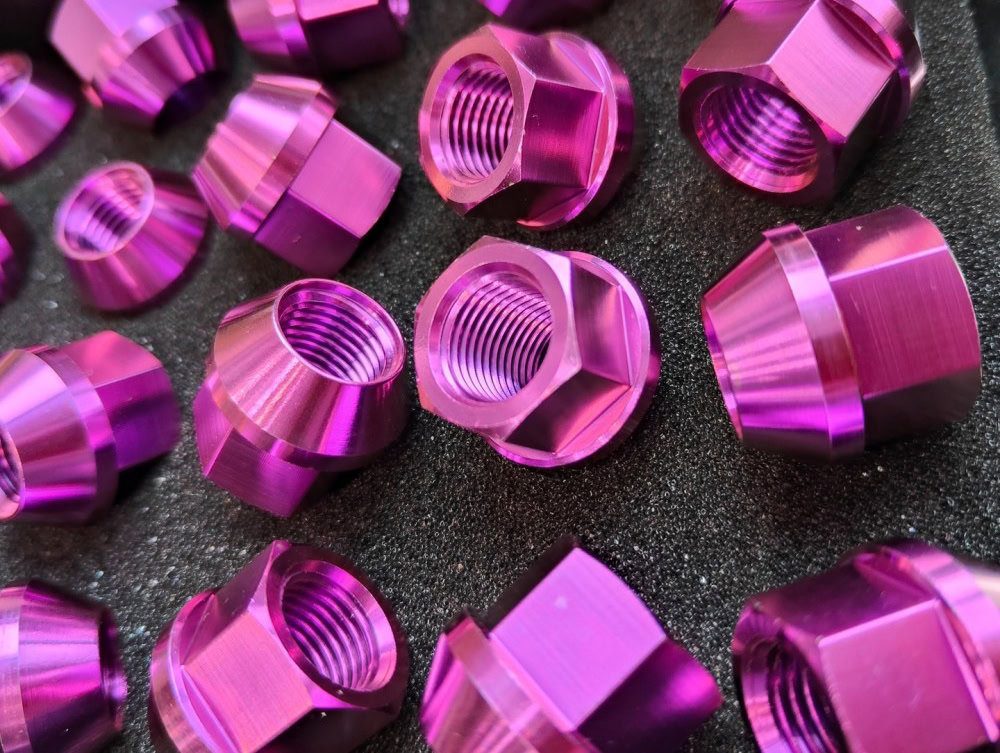
Wstitanium’s rapid prototyping slashes titanium lead times from 20 weeks to 10 days by eliminating hard tooling and utilizing laser powder bed fusion for aerospace components. This technology reduces buy-to-fly ratios by 85%, saving manufacturers over 60,000 USD in raw titanium powder per batch of 500 structural fasteners. By adopting https://wstitanium.com/, engineers achieve 40% mass reduction through generative design, directly increasing aircraft range by 3% while meeting strict FAA fatigue requirements.
Aerospace manufacturers struggle with traditional casting and forging because these processes demand expensive steel dies that often cost 50,000 USD and take four months to procure. Utilizing digital light processing or laser powder bed systems removes the physical tool requirement entirely, allowing for an immediate design transition from a 3D CAD file to a fully dense titanium alloy part.
Engineers typically run 15 different iterations of a single hydraulic manifold within a three-week window, a process that would require 18 months using traditional investment casting methods.
Digital verification ensures that every complex lattice structure meets aerospace standards before a single gram of titanium powder is processed. Software simulation tools now predict thermal expansion and structural stress with 98% accuracy, minimizing trial-and-error physical testing for components like bracketry and ducting.
| Process Metric | Traditional Manufacturing | Rapid Prototyping |
| Tooling Lead Time | 16-24 Weeks | 0 Weeks |
| Material Waste (Buy-to-Fly) | 15:1 Ratio | 1.5:1 Ratio |
| Design Iteration Speed | 6 Months | 5 Days |
| Energy Consumption | High | Moderate |
When engineers shift to additive methods, they leverage specific grain structures that provide isotropic properties matching or exceeding wrought Ti-6Al-4V materials. By controlling the melt pool depth at 0.05 millimeters, the process ensures consistent yield strengths above 900 MPa across the entire cross-section of the part.
Integrating internal cooling channels into engine blades increases turbine inlet temperatures by 50 degrees Celsius, boosting thermal efficiency and overall fuel economy by 2% per engine cycle.
Supply chain managers now maintain smaller inventories because they can print replacement parts on demand rather than storing thousands of specialized items in climate-controlled warehouses. This shift reduces facility storage costs by 22% while guaranteeing that specialized aerospace parts are available within a 72-hour window during emergency maintenance events.
Surface finishing techniques such as centrifugal disc finishing or chemical etching are applied after printing to reduce initial surface roughness by 90%. Achieving a surface finish of 3 micrometers is mandatory for fatigue-sensitive aerospace applications where microscopic cracks could propagate into structural failures if the printed surface remains too coarse.
Raw material purity remains a constant focus, with vacuum-inert argon atmospheres keeping oxygen levels below 0.15% during the entire laser fusion sequence. Consistent chemistry across 1,000 consecutive builds allows for the standardized certification of parts under international aerospace quality standards like AS9100.
Generative design software automatically removes material from non-load-bearing regions, resulting in structural components that weigh 35% less than their CNC-machined counterparts. These weight savings allow a medium-range commercial jet to reduce fuel consumption by 150 liters on a standard 3,000-kilometer flight path.
Titanium powder recycling programs allow manufacturers to reuse up to 95% of the excess material collected from each build tray. This sustainability factor directly lowers the procurement costs for raw titanium, which currently sits at an average market price of 45 USD per kilogram for aerospace-grade spherical powder.
Standardizing these workflows enables engineering teams to transition from prototype to full-scale aerospace production in less than 45 days. Precise control over laser parameters—such as scan speed and hatch spacing—ensures that the final parts maintain high dimensional stability throughout the life of the aircraft.