How Can Private Label Period Underwear Improve Your Product Line?
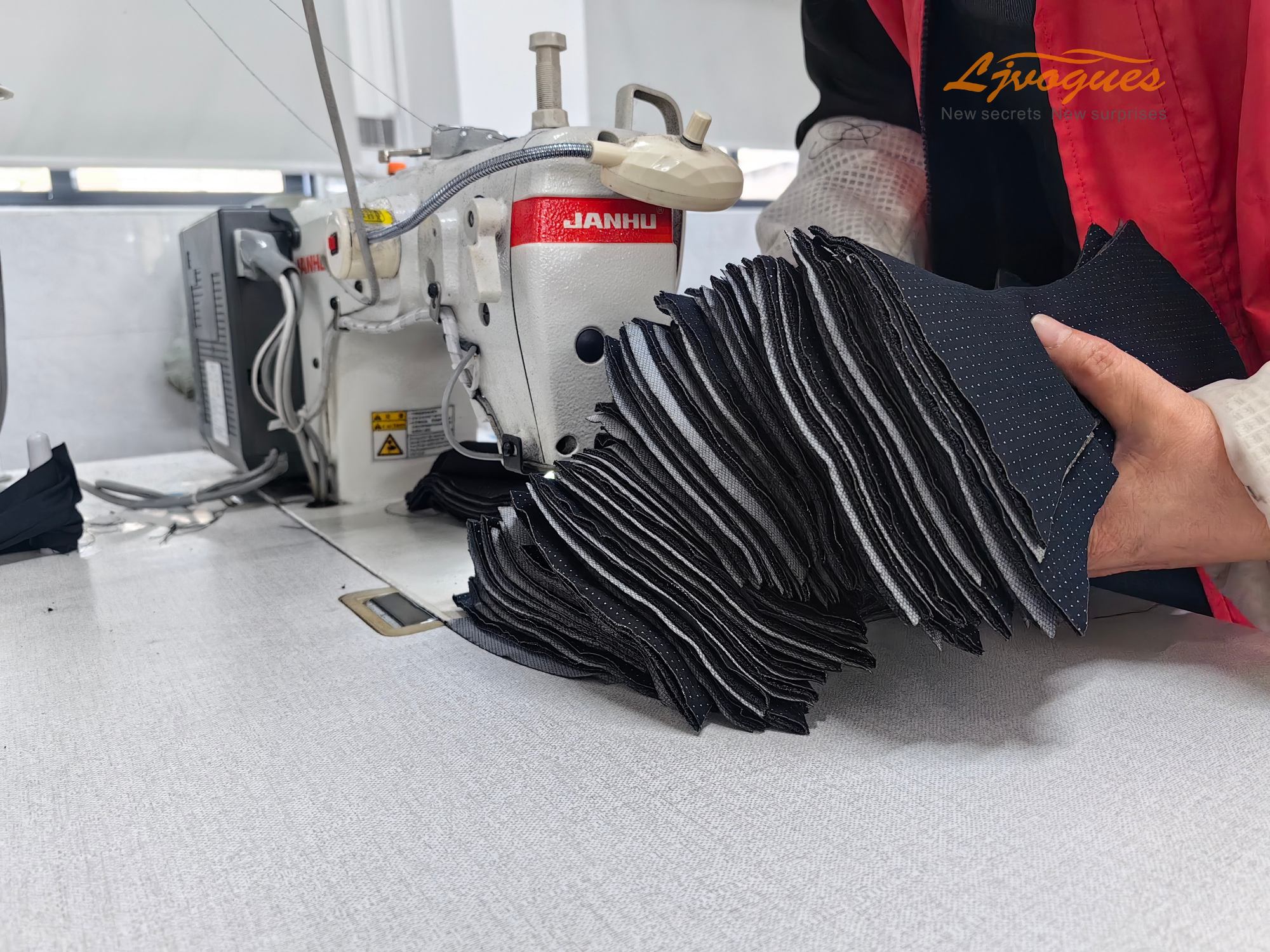
Private label period underwear can expand a product line because one base garment can support several absorbency levels, fits, price points, and customer groups without creating a separate product category for every use case. In a 2025 U.S. study of 11,455 participants, 20% reported using period underwear, compared with 48% using regular tampons and 47% using pads. A brand can therefore add briefs, hipsters, high-waist styles, overnight coverage, teen sizing, and multipacks around an already established menstrual-care behavior while controlling fabrics, gusset construction, labeling, packaging, and retail positioning through private-label manufacturing.
Period underwear works differently from ordinary underwear because the gusset has to manage fluid while remaining comfortable enough for several hours of wear. A typical construction may combine a skin-facing layer, a transfer layer, an absorbent textile, a liquid-resistant membrane, and the outer garment fabric. Adding layers without controlling thickness can make the crotch stiff, slow to dry, or difficult to fit closely around the legs.
That construction gives a brand more product choices than simply printing its logo on a standard garment. Light-flow underwear can use a thinner absorbent zone, while an overnight brief can extend coverage farther toward the front and rear. A 2025 randomized menstrual-product study supplied participants with eight pairs of super-absorbency period underwear and observed product use across two menstrual cycles, showing why coverage, capacity, and repeated-use instructions matter when a garment is sold as menstrual protection.
A useful private-label specification should describe the garment in measurable terms: gusset dimensions, material composition, finished garment measurements, tolerances, seam type, elastic recovery, wash method, absorbency test method, and acceptable leakage criteria.
Absorbency labels need particular care because terms such as “light,” “moderate,” and “heavy” do not automatically describe a universal laboratory capacity. A buyer should ask the supplier how milliliters are measured, what liquid is used, whether the result refers to saturation or practical leak-free capacity, how many samples are tested, and whether underwear is tested again after washing. Marketing claims become much easier to defend when the test procedure is documented before packaging is printed.
Consumer research supports offering more than one use level. The Apple Women’s Health Study reported that, among 7,394 respondents surveyed from November 2022 to March 2023, 19% used period underwear, while 47% used regular tampons, 46% used pads, and 43% used panty liners; respondents could use more than one product. A period-underwear range therefore does not have to replace pads or tampons. It can be designed for customers who combine products, use underwear for backup protection, or switch products across different days of a cycle.
That usage pattern supports a wider SKU structure without requiring unrelated designs.
| Product format | Practical specification focus | Possible retail role |
|---|---|---|
| Light brief | Thin gusset, low bulk, moderate coverage | Spotting or backup use |
| Moderate hipster | Mid-length absorbent zone, close leg fit | Regular daytime wear |
| Heavy high-waist brief | Larger absorbent area, secure waistband | Higher-flow days |
| Overnight brief | Extended front/rear protection | Sleep and longer wear |
| Teen style | Smaller grading, simple care instructions | First-period range |
| Multipack | Mixed absorbencies or colors | Higher basket size |
Age also affects product mix. In the 2025 U.S. cohort, period-underwear use was 17% among participants younger than 20 and 22% among those aged 30–39; pad use was 57% and 45% in the same two age groups. A teen range therefore should not simply shrink an adult brief. Higher rear coverage, softer waist elastic, straightforward absorbency language, school-friendly packaging, and easy washing instructions may fit the intended use better.
Adult ranges can separate products by clothing and wear occasion. A smooth microfiber or nylon-rich style may suit fitted clothing, while a cotton-rich brief may suit customers who prefer a familiar underwear feel. Overnight products can use higher rises and longer gussets. The manufacturer should still grade the absorbent panel with the garment size; keeping one gusset width across a very broad size range can change body coverage even when nominal absorbency stays unchanged.
Material selection also affects how credible the product feels after repeated washing. Stretch recovery influences whether the leg opening continues to sit close to the body, while lamination and membrane stability affect whether the inner structure stays flat. Before approving bulk production, brands can wash pre-production samples for 5, 10, 20, or more cycles under the proposed care instructions and record dimensional change, delamination, odor retention, drying time, elastic recovery, and leakage performance rather than evaluating appearance alone.
A 2021 systematic review covering 44 studies in 20 countries and at least 14,812 participants found that the evidence base for reusable menstrual products varied substantially in quality; only one included qualitative study involved period underwear, while most concerned reusable pads. Product pages should therefore avoid unsupported claims such as guaranteed health benefits, universal wear times, or precise environmental reductions unless the claim has testing or lifecycle data behind it.
Chemical specifications deserve the same attention. A 2025 Environmental Science & Technology study analyzed 41 menstrual products purchased in 2024, including four menstrual-underwear products, four reusable pads, six cups, and 27 single-use products. A four-garment underwear sample is far too small to describe an entire market, but it illustrates why a private-label buyer should request bills of materials, restricted-substance requirements, supplier declarations, and relevant third-party reports for fabrics, membranes, finishes, elastics, prints, and trims.
That documentation becomes more important when a brand wants to advertise material-related claims. Instead of saying a garment is “chemical-free” or “completely safe,” specify what has actually been evaluated and under which method. If a supplier offers certification, confirm the certificate number, scope, product class, covered components, issuing body, and validity date rather than treating a fabric certificate as automatic certification of the finished garment.
Fit testing should then be separated from material testing because a garment can pass fabric tests and still leak through poor body fit. Sampling across several sizes can reveal whether leg openings gape, waistbands roll, gussets shift backward, or seams create pressure after several hours. A panel of 20–30 wear testers across selected sizes can provide more useful development feedback than relying on one fit model, although a brand should describe internal wear testing as product development rather than clinical research.
Customer behavior provides another reason to invest in fit. In a 2021 Australian survey, 596 people aged 15–29 who had menstruated during the previous six months were studied; 37% had used a reusable product during their most recent period, and period underwear was the most common reusable option at 23.8%. Another 10.6% had tried a reusable product previously but were not using one during their latest period. Comfort, washing, drying, sizing, and day-to-day practicality can therefore affect continued use after the first purchase.
Private labeling lets a retailer adjust those details before expanding the assortment. A practical first range could use three bodies rather than ten: a moderate everyday brief, a heavier high-waist brief, and an overnight full-coverage style. Each body can then be offered in two or three colors and a controlled size range, keeping the initial SKU count manageable while still giving shoppers a functional choice.
For example, three styles × three colors × six sizes already creates 54 size-color-style combinations. Adding four more silhouettes would raise the assortment to 126 combinations before packaging variations are counted. MOQ discussions should therefore happen at SKU level, not only at total-order level: ask whether minimums apply per style, fabric, color, size, printed elastic, packaging format, or production run.
Packaging can carry much of the information needed to prevent misuse. A compact pack can state intended absorbency, washing temperature, whether fabric softener or tumble drying is discouraged, composition, size, and basic reuse instructions. Online listings should use the same definitions so a customer does not see “heavy” on the product page and a different classification on the packaging.
U.S. labeling also has requirements outside menstrual-performance claims. Under the Textile Fiber Products Identification Act, fibers representing 5% or more of total fiber weight generally must be identified by generic name, subject to the rule’s exceptions, and imported textile products must identify the country where they were processed or manufactured. Private-label artwork therefore needs review before thousands of care labels, hangtags, boxes, or polybags are produced.
Regulatory treatment also depends on how the product is designed and marketed. The FDA’s 2026 product-classification database lists reusable unscented menstrual pads under 21 CFR 884.5435 as Class I devices, while unscented menstrual tampons fall under Class II. Period underwear should not automatically be assigned the same status without reviewing its intended use, claims, materials, and applicable U.S. requirements. A supplier saying “FDA approved” is not enough; the brand should identify the exact regulatory basis for the statement.
Commercial planning becomes easier once performance, labeling, and SKU count are defined. Bundles can then increase the number of units sold per transaction without inventing another garment: a three-pack may contain three moderate styles, while a five-piece cycle set could combine two moderate, two heavy, and one overnight pair. Mixed bundles also allow customers to test several absorbencies before buying larger packs.
The assortment can later expand using actual return, review, and reorder data. Track leakage complaints by size and flow level, size exchanges by body shape, wash-related failures by production lot, and reorder rates by style. If 8% of returns for one brief cite leg-opening looseness while another body shows 2%, pattern grading deserves attention before another color launch; color choice cannot correct a construction problem.
Manufacturing agreements can support the same level of control. A purchase specification can name approved fabrics, component suppliers where appropriate, measurement tolerances, color references, wash-performance requirements, sampling stages, carton quantities, barcode placement, inspection level, and the approved pre-production sample. If bulk production changes the membrane, absorbent core, adhesive, elastic, or fabric weight, the supplier should obtain written approval before shipment.
For a performance garment, the approved sample is more useful when it is supported by numbers: material weights, dimensions, tolerances, test conditions, wash count, and acceptance limits can all be checked again during production.
Independent research also shows that period underwear already sits beside established menstrual products rather than outside the category. A Spanish study published in 2022 included 22,823 participants; 54.9% reported using reusable menstrual products, while menstrual panties were used by 8.7%. The percentage differed from U.S. and Australian studies because populations, years, sampling methods, and product habits differed, so a private-label range should be built around its intended market rather than copying one global assortment.
For a retailer already selling underwear, activewear, personal care, or menstrual products, the most useful expansion usually comes from adding measurable differences customers can understand: fit, coverage, absorbency, fabric feel, washing requirements, and pack size. A private-label program becomes stronger when every retail claim can be traced back to a written specification, test result, label requirement, or approved production sample.